On this page
A perfume gift set is more than several bottles placed in one box. For most customers the packaging is the first physical contact with the brand: they notice the surface, feel the weight, work out how the lid opens and only then reach the fragrance. When those moments are planned together, a set reads as one collection rather than a bundle of products.
This guide covers the decisions that shape a perfume gift set: how products are arranged, which box structure suits the set, how custom inserts hold glass bottles, which printing and finishing steps are worth the cost, and what to confirm before mass production. Each section reflects how we build these packs for fragrance brands at our factory in Dongguan.
What makes a perfume gift set unboxing memorable?
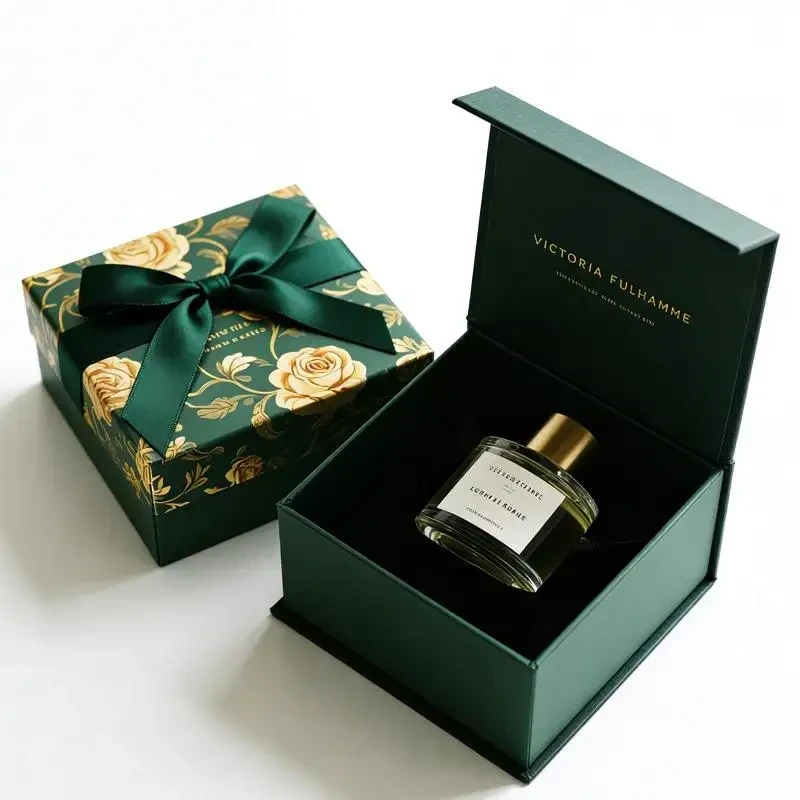
A memorable unboxing is not created by an oversized box or layers of decoration. It comes from a structure that opens predictably, a layout where every item has a place, and materials that feel consistent with the fragrance. The customer should be able to tell, within a few seconds, what is inside and where to start.
Why the first impression starts before the box opens
Colour, shape, texture and logo placement already communicate the fragrance's character while the box is still closed. Textured speciality paper and restrained foil stamping suit a premium scent; a clean folding carton with minimal graphics can be the right answer for an everyday line. The proportions matter as much as the decoration: a box that is noticeably larger than its contents looks generous in a render and feels hollow in the hand.
It also helps to design the exterior and interior as one system. A beautifully printed lid loses its effect if the products look loose or misaligned the moment it is lifted. The inside deserves the same attention as the outside.
How packaging can reflect a fragrance brand's personality
Different fragrances carry different expectations. The table below is a starting point for matching a packaging direction to a brand position, not a rulebook; the structure still has to suit the bottles you actually sell.
| Brand positioning | Packaging direction | Typical details |
|---|---|---|
| Luxury | Elegant and refined | Speciality paper, foil stamping, rigid walls |
| Minimalist | Clean and modern | Simple graphics, matte lamination |
| Natural | Organic and understated | Textured uncoated paper, muted colours |
| Romantic | Soft and decorative | Gentle colours, ribbon, printed interior |
| Vintage | Classic and distinctive | Deeper colours, embossed detailing |
| Contemporary | Creative and expressive | Contrast, custom graphics, mixed finishes |
For brands with several collections, keeping the structure and logo position consistent ties the range together, while colour, artwork and interior layout separate one scent from another.
How should products be arranged inside a perfume gift set?
Layout planning begins with the contents, not the box. A set may hold a full-size bottle, miniatures, sample vials, body lotion or a rollerball, and each item needs its own space and a clear position in the presentation. The aim is not to fit the maximum number of products into one box; it is to make the collection easy to read and easy to use.
Start with a product list, not a drawing
List every item with its dimensions and weight before any structure is proposed. Common combinations behave quite differently, and the layout that suits one is rarely right for another.
| Gift set combination | Suggested layout | Main consideration |
|---|---|---|
| Perfume plus samples | Main bottle with separate sample slots | Visibility of both products |
| Two full-size bottles | Side-by-side compartments | Balanced spacing and equal protection |
| Perfume plus body lotion | Separate sections for each format | Different heights and weights |
| Miniature discovery set | Individual cavities in one tray | Easy identification and removal |
| Perfume plus accessories | Dedicated accessory area | Keeping small parts organised |
Where should the main bottle sit?
With a single hero bottle, central placement is usually the clearest. With two or more equally important fragrances, side-by-side sections read as a pair rather than a hierarchy. A layered arrangement can reveal smaller items first and bring the main bottle forward later, which suits gift sets where the reveal is part of the purchase.
Whatever the arrangement, check bottle height, cap size, weight and centre of gravity. The cavity needs clearance for the complete bottle, cap included, while still holding it steady. Test with the real bottle rather than a dimension list; glass shapes vary more than drawings suggest.
Single-layer or multi-layer box?
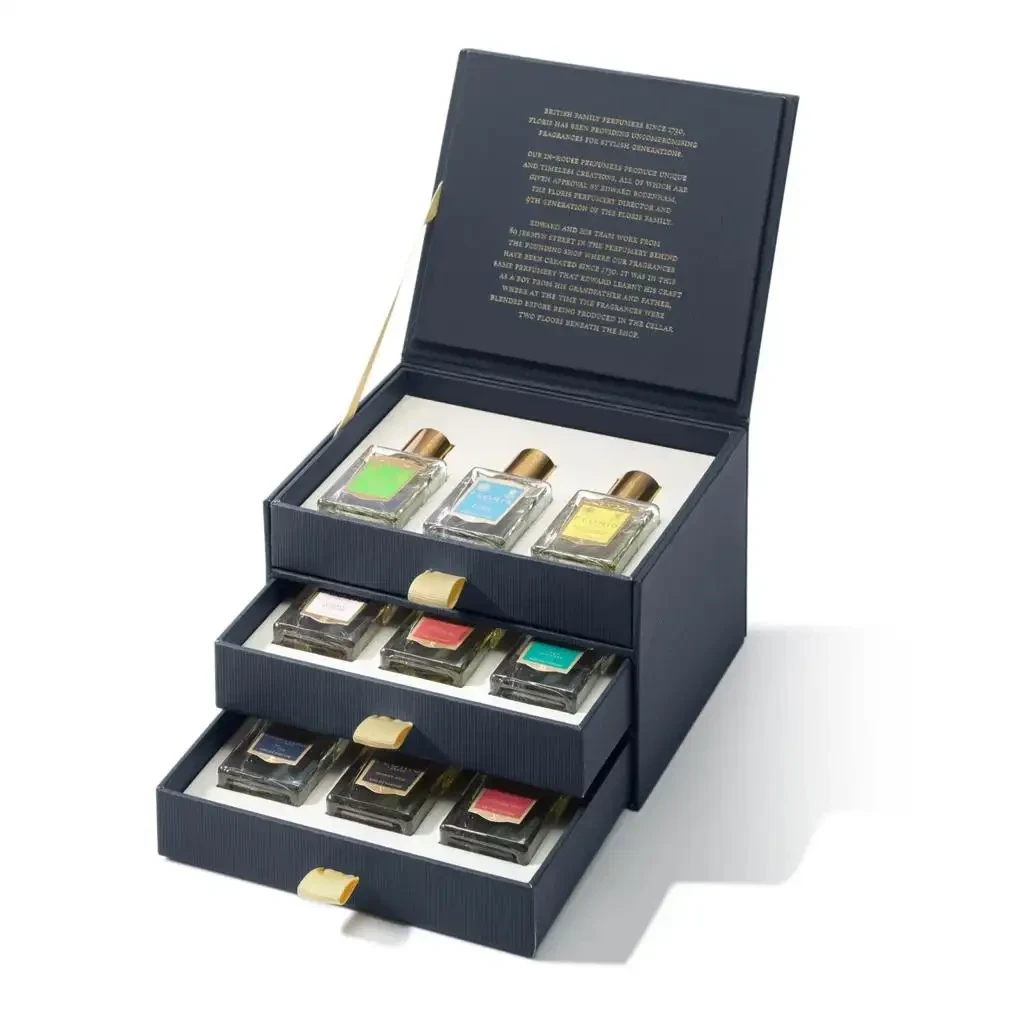
A single-layer box opens in one movement and is simpler to assemble, pack and store. A multi-layer structure separates product groups and creates a slower reveal, but it adds material, assembly time and overall height. Neither is automatically better; the choice follows the product combination and how much of the purchase decision rests on presentation.
Which box structure suits a perfume gift set?
The structure decides how the box opens, how much internal space is available and how easily products are removed. For magnetic closure boxes, the hinged lid stays attached and opens like a book; a drawer box slides an inner tray out of an outer sleeve; a lid-and-base rigid box lifts away completely. Each gives a different rhythm to the reveal.
When magnetic closure works well
Magnetic boxes suit sets with a main bottle, miniatures and a few accessories, because the lid can hold a printed interior panel and the hinge keeps both hands free. During sampling, check magnet position, lid alignment and closing strength: a lid that closes too firmly feels difficult, and one that closes too softly can open in transit.
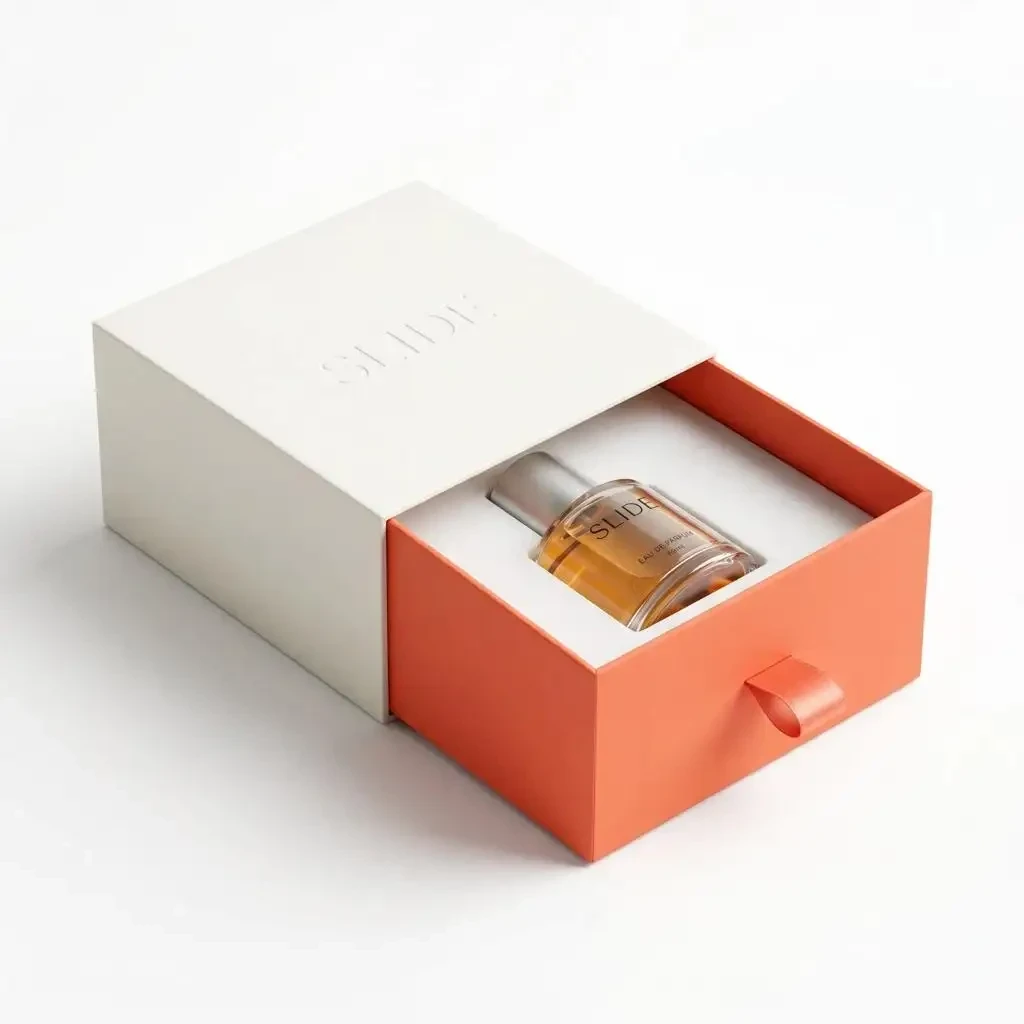
Drawer, lid-and-base and book-style compared
| Structure | Main advantage | Suits |
|---|---|---|
| Magnetic closure | Hinged opening, printed interior panel | Premium sets and launch kits |
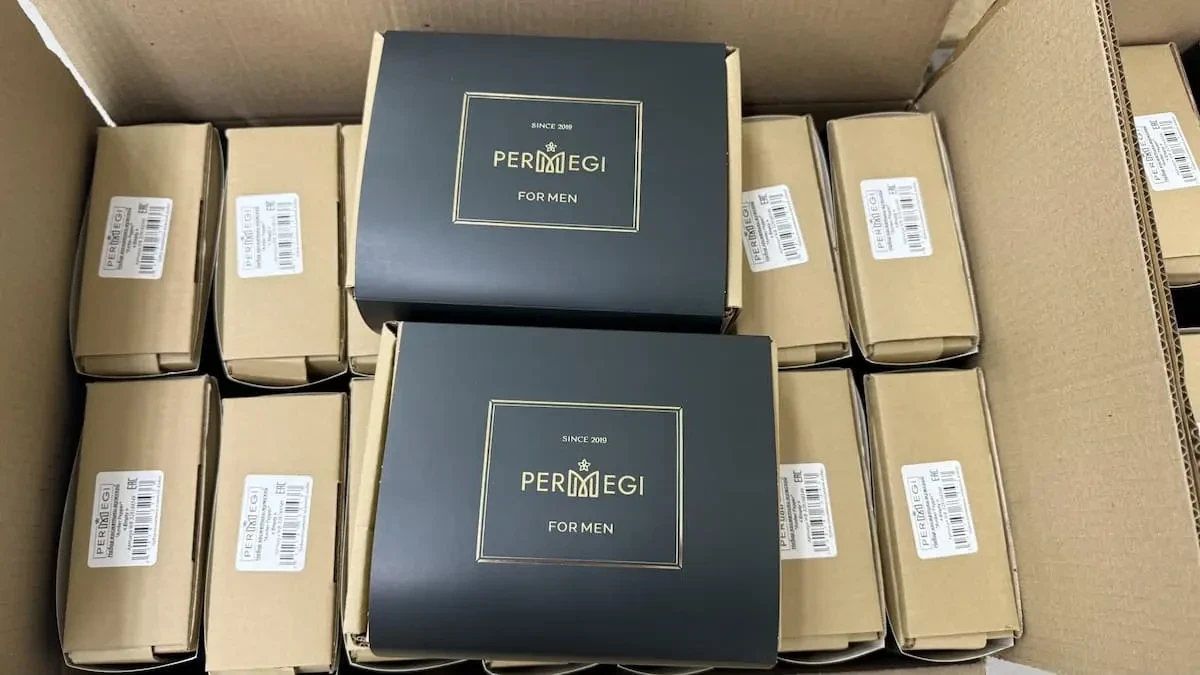
| Drawer-style | Sliding reveal, organised compartments | Discovery sets and miniatures |
| Lid-and-base | Classic presentation, flexible inserts | Traditional gift boxes |
| Book-style | Wide opening area for presentation | Collections with story panels |
| Multi-layer | Separate levels for product groups | Multi-product gift sets |
The most suitable structure is not the most complicated one. It is the one that presents the collection clearly, accepts a practical insert and can be produced and packed consistently. If the set may later move to a folding carton for cost reasons, our comparison of rigid boxes and folding cartons explains where the two diverge.
How do custom inserts improve organisation and protection?
Perfume bottles vary in shape, weight and cap design. A narrow base, a heavy glass body or a decorative cap each need different support. A fitted insert keeps the bottle in position, protects it during handling and makes the inside of the box look considered rather than improvised.
Which insert material fits which bottle?
| Insert material | Characteristics | Typical use |
|---|---|---|
| EVA foam | Firm support, cut to shape, can be covered | Heavy or fragile bottles |
| Paperboard | Light, simple to fold and print | Light items and printed dividers |
| Sponge | Soft cushioning, flexible cutting | Sets needing extra protection |
| Velvet-covered insert | Soft contact surface, premium appearance | Luxury fragrance sets |
Material choice follows bottle weight and shape first. Our insert materials guide covers foam, pulp and board in more detail, and custom inserts shows how cavities are developed from a physical sample. For a broader comparison of options, see foam, pulp and paperboard inserts.
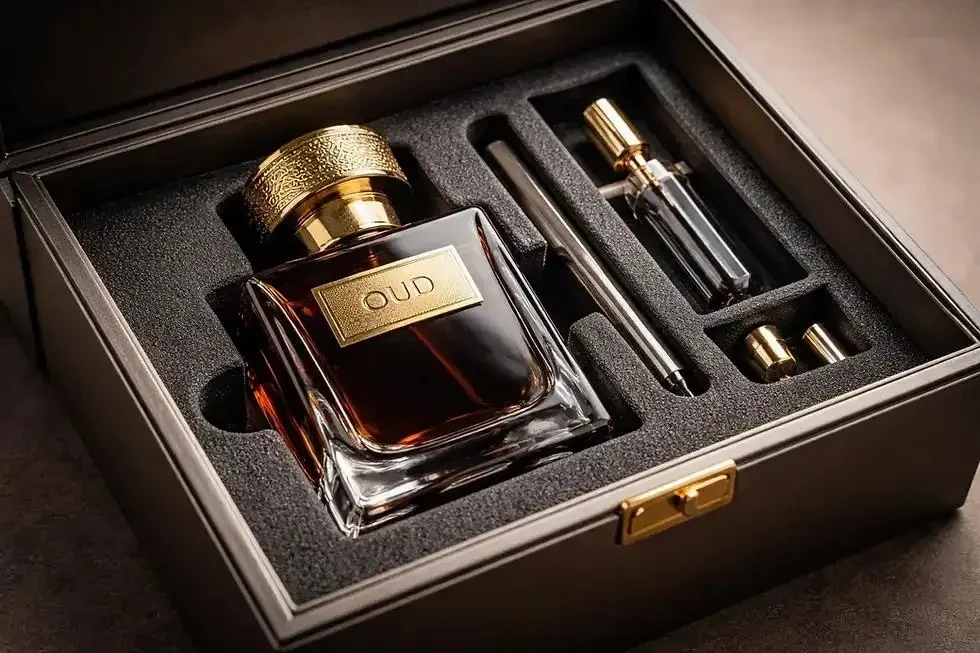
How tight should a compartment be?
Close enough to stop movement, loose enough to lift the bottle out without pulling at the glass. Check support under the base, clearance around the cap, separation between accessories and stability when the open box is carried. A drawing cannot confirm this; a physical sample with the real products can.
Materials are often combined. An EVA base can carry the weight while a velvet or fabric covering softens the visible surface, and paperboard sections can organise sample vials or cards. Each addition changes assembly time and cost, so keep only the layers that improve the presentation.
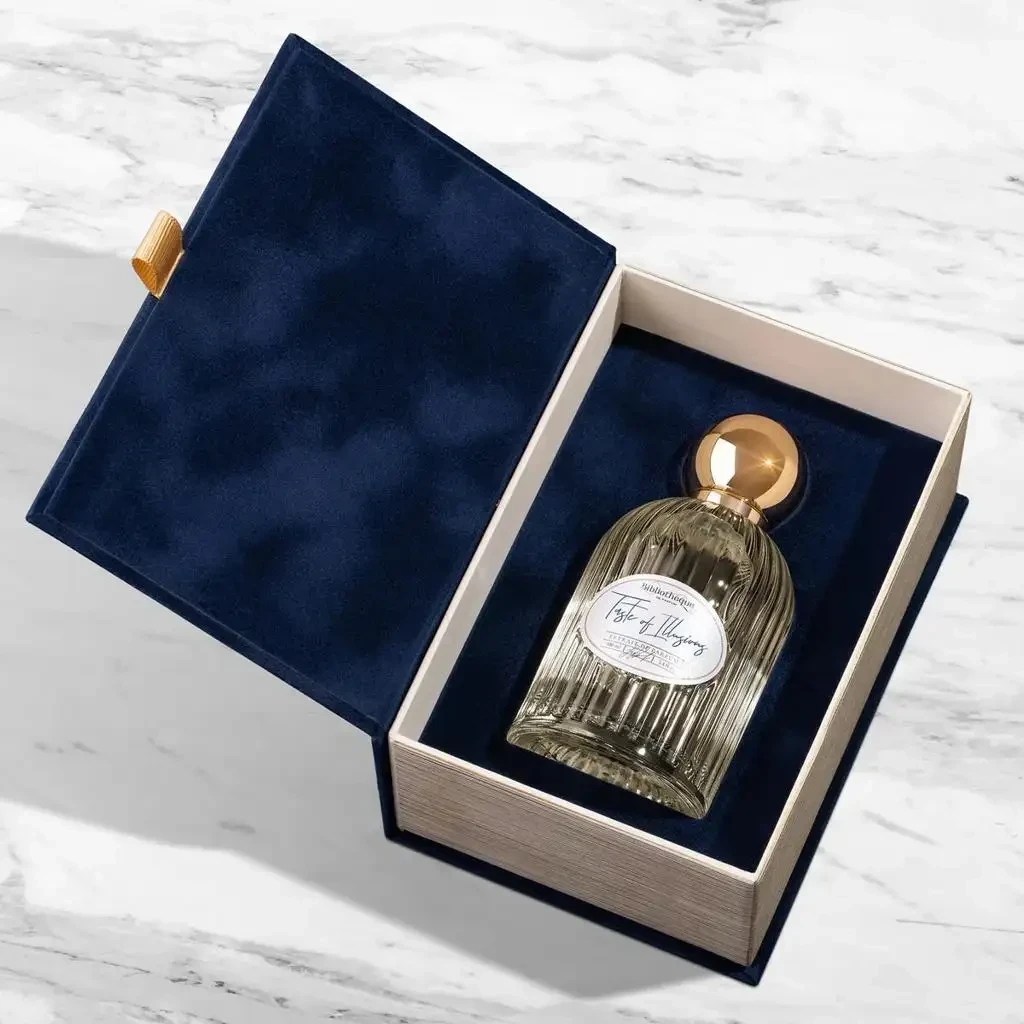
How can printing and finishing make the set feel premium?
Printing and finishing decide how the box is seen and touched. A restrained combination usually reads better than several effects competing on one surface: one foil-stamped logo on a textured sheet can say more than foil, spot UV and embossing applied together.
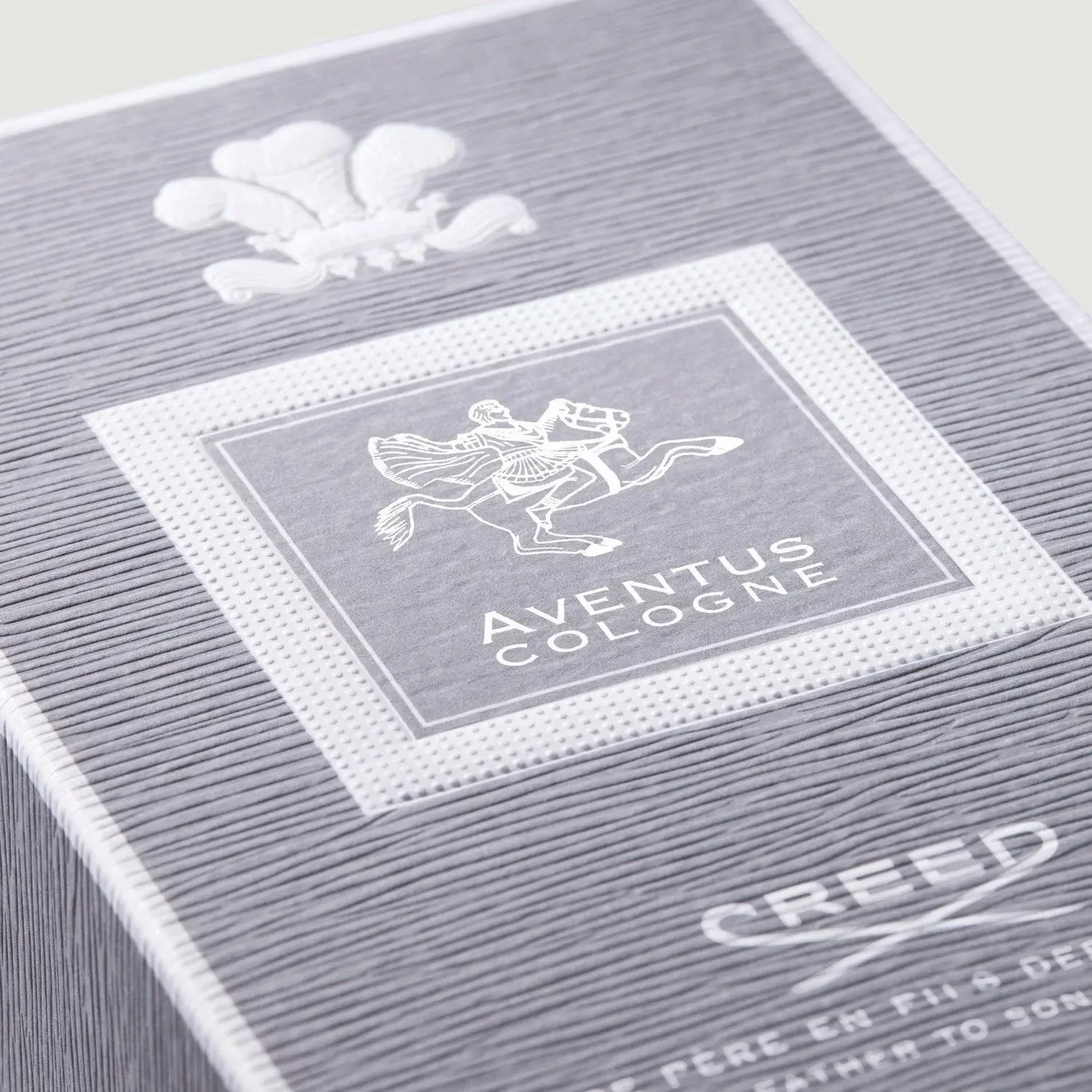
Finishes worth considering
- Hot foil stamping: metallic highlights for logos and key lines; check adhesion on textured stock.
- Embossing and debossing: raised or recessed detail that reads through touch; see our notes on embossing and debossing.
- Spot UV: gloss accents against a matte background; effective when used on one element.
- Matte or gloss lamination: an overall surface change that affects both look and handling; soft touch and matte varnish behave differently in use.
- Speciality paper: texture and colour that print alone cannot reproduce.
Ribbons, story cards, tissue paper and branded pulls can add value when they support the set. Too many of them create clutter, slow assembly and increase cost without improving the experience.
How do you balance the unboxing experience with cost?
A premium gift set does not have to be oversized. Cost is driven by dimensions, material grade, insert complexity, finishing steps, assembly and freight, not by how impressive the box looks in a photograph. Starting from accurate dimensions is the simplest way to avoid paying for empty space.
- Fit the structure to the products: remove unnecessary void space while keeping enough room for the insert.
- Protect the bottle properly: a stable cavity prevents damage that costs more than the material saved.
- Choose one opening mechanism: complexity should serve the reveal, not decorate it.
- Use finishing selectively: one strong detail usually outperforms several weak ones.
- Review the outer carton: export packing and palletisation affect freight as much as the gift box itself.
Dimensional weight means a larger box can cost more to ship even when it is light. Review outer dimensions, master carton count and stacking before confirming the gift box size. Our notes on cost per unit and export cartons and palletisation explain where the money goes.
What should be confirmed before mass production?
A perfume gift set has to fit the actual bottles, survive handling and arrive looking as approved. A short, structured development process catches most problems while changes are still cheap.
Prepare the brief
- Dimensions and weight of every bottle, cap and accessory.
- Photographs of bottle shapes and any special details.
- The exact contents of each set and how many variants you plan.
- Logo files, brand colours and print-ready artwork.
- Preferred structure, insert material and finishes.
- Estimated quantity, target schedule and destination market.
If the bottle or combination is not final, say so before sampling. Measuring the inner and outer dimensions correctly at this stage prevents a costly rebuild later; our guide to measuring box dimensions covers the method.
Evaluate the physical sample
| Check | What to confirm |
|---|---|
| Dimensions | Internal fit and external size against the brief |
| Product fit | Bottle stability and ease of removal |
| Insert | Support, cavity alignment and finish |
| Opening | Smooth hinge or drawer action, reliable closure |
| Printing | Colour accuracy and artwork position |
| Finishing | Foil, emboss and lamination quality |
| Overall | Consistency with the approved design |
For glass bottles, protection deserves particular attention. Depending on the route, additional drop or vibration testing may be appropriate; ISTA publishes the standard test sequences used for distribution packaging. Fragrance products also carry labelling obligations in the destination market, for example under EU Regulation 1223/2009 for cosmetics sold in Europe.
Approve before production
Once the sample is signed off, confirm final dimensions, structural drawings, materials and insert specification, artwork and colours, finishing, product arrangement, quantity, schedule and shipping terms. Record the approved sample; it becomes the reference for the production run. Our sample approval guide lists what to keep on file.
Questions buyers ask about perfume gift set packaging
What is the minimum order quantity for a custom perfume gift set?
Typically around 1,000 pieces per style, depending on structure, materials, insert complexity and printing method. Small trial runs can sometimes be arranged after we review the specification.
How long does sampling and production take?
Sampling is usually around 7 to 10 working days once the structure and artwork are confirmed. Mass production is typically around 20 to 25 working days after sample approval, depending on quantity and the production queue.
Can the insert be changed without rebuilding the box?
Often yes, if the outer dimensions and insert depth stay within the approved structure. A new insert still needs a sample, because small changes in cavity depth can affect how the lid closes.
Is a multi-layer box always more premium?
No. A single-layer box with a well-fitted insert can feel more considered than a tall multi-layer structure with empty space. The right choice depends on the number of products and how you want the set to be discovered.
Plan your perfume gift set packaging
Good packaging brings together product fit, a protective insert, a structure that suits the reveal and finishing that matches the fragrance. If you are developing a new collection or improving an existing set, prepare bottle dimensions, the product combination and your preferred direction before requesting a sample.
Send the details through our quote form, or browse the structures we produce and the materials and finishes library. Common questions about MOQ, lead times and artwork are answered in the packaging FAQ.